Get Your Articles Published on Premium News Sites – Book A Call >>

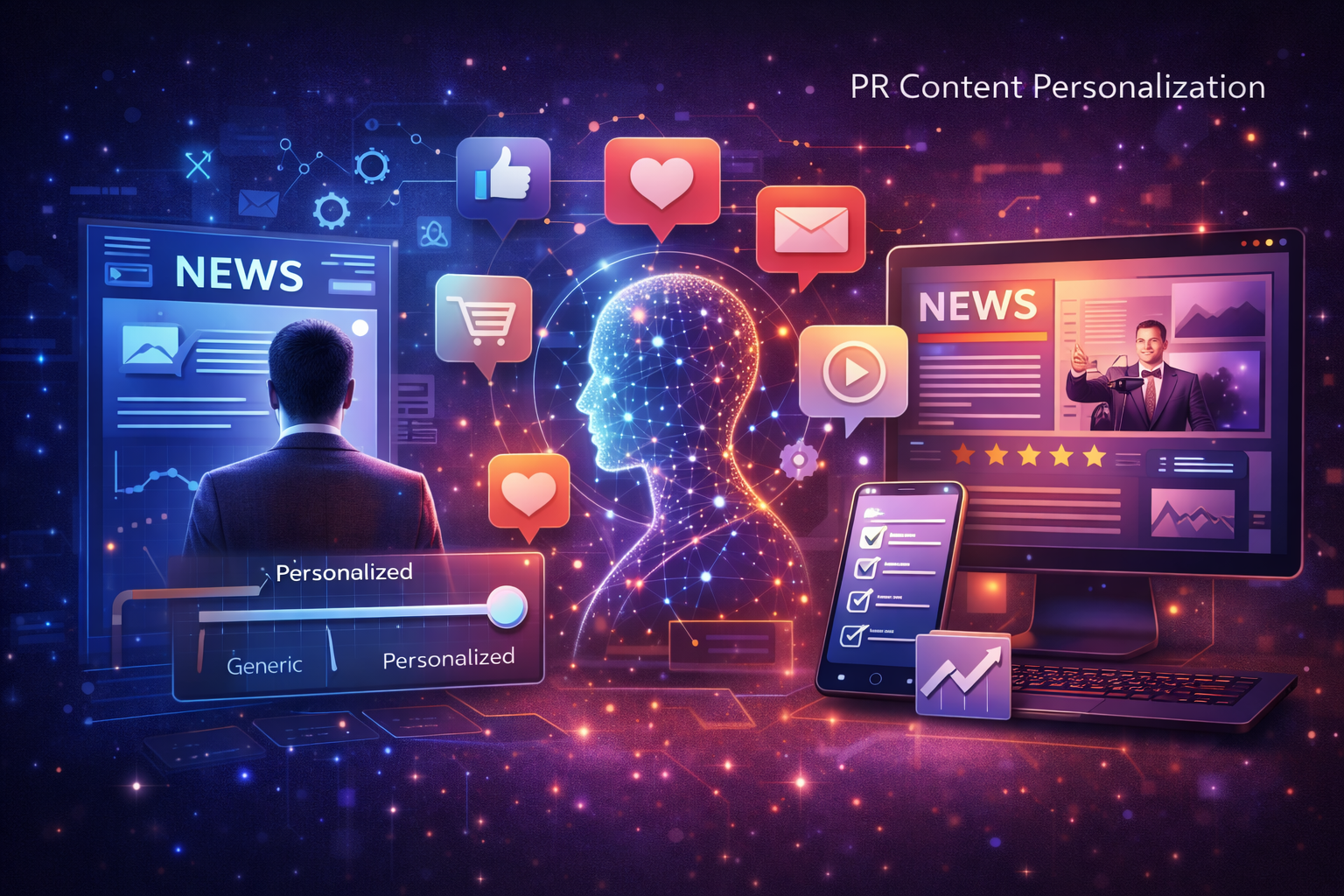
Unlock Success with PR Content Personalization Techniques

PR content personalization helps brands craft messages that truly connect with their audience.
It doesn’t work like it used to. You can’t just send one message out into the world and hope it sticks. People scroll fast. Journalists skim. Audiences filter everything. If it doesn’t feel relevant, it disappears. That’s exactly why PR content personalization matters now more than ever.
Instead of broadcasting the same story to everyone, brands have to slow down and ask a better question: Who are we really talking to? Because a startup founder doesn’t think like an investor. A tech reporter doesn’t read like a lifestyle blogger. And customers? They want to feel understood.
So today, public relations isn’t about being louder. It’s about being sharper. More intentional. More human. And when you tailor the message to the right audience, everything changes engagement, trust, and long-term impact.
What Is PR Content Personalization?

It sounds technical at first. Almost complicated. But it’s not. At its core, PR content personalization is about one simple shift — speaking to someone, not at everyone.
For years, public relations followed a broadcast model. Write one press release. Send it everywhere. Hope it lands. Sometimes it did. Often, it didn’t. Because the message felt flat. Generic. Easy to ignore. Now? The rules have changed.
More Than Just Adding a Name
Let’s clear something up. PR content personalization is not about inserting a journalist’s first name into an email. It’s not swapping out a headline and calling it a strategy. That’s surface-level.
Real personalization goes deeper. It means understanding what matters to a specific audience. What they care about. What problems they’re trying to solve. Then shaping the message so it connects naturally.
For example, a sustainability angle might catch the attention of an environmental publication. Meanwhile, a business outlet may care more about revenue growth and market impact. Same company. Same announcement. Different focus. And that difference? It’s everything.
Relevance Is the Real Currency
Today, attention is limited. People guard it carefully. So relevance becomes your strongest tool. When a message feels tailored, it earns a second glance. It feels intentional. Thoughtful. And because of that, it builds trust faster.
That’s where PR content personalization quietly does its work. It aligns the story with the reader’s world. Instead of forcing them to adapt to your narrative, you meet them where they already stand. And naturally, engagement follows.
It Starts With Understanding
You can’t personalize what you don’t understand. That’s why audience research sits at the center of the process. Who are you speaking to? What motivates them? What language do they use?
Some PR agencies, like Media Anchored, build campaigns around this idea from the beginning. They don’t just craft announcements. They map audiences first. Then they design messages that feel almost custom-built. Because in truth, they are.
Personalization vs. Customization
There’s also an important distinction here. Customization tweaks the surface. Personalization shifts the core. Customization might adjust formatting. Personalization reshapes the angle. It may even change the entire narrative structure depending on who’s receiving it. One approach is editing. The other rethinks. And in modern public relations, the second approach wins more often.
Why It Feels More Human
At the end of the day, PR content personalization works because it mirrors real conversation. Think about how you speak in everyday life. You don’t speak to your friend the same way you speak to your boss. The tone shifts. Emphasis changes. Different details come into focus. Not because you’re pretending.
But because you understand who’s listening. That’s the heart of it. Personalized PR simply brings that same awareness into brand communication. And when done well, it doesn’t feel strategic at all. It just feels right.
Targeted Public Relations Messaging

Not every story fits every room. You wouldn’t pitch a tech breakthrough the same way to a finance editor and a lifestyle blogger. The details they care about are different, so the angle should be different too. That’s where Targeted Public Relations Messaging steps in. It’s not about changing the truth. It’s about choosing the right lens.
The Right Message for the Right Audience
Let’s say your company launches a new product. Investors want numbers, growth potential, and market share. Customers want benefits, ease, and real-life impact. Journalists want a clear hook and a strong angle their readers will care about.
Now imagine sending the exact same message to all three. It feels off. Too broad. Too unfocused.
Instead, targeted messaging asks a simple question first: Who is this really for? Then it builds the story around that answer. When you do that, something shifts. The message stops feeling generic and starts feeling intentional.
Precision Over Volume
For a long time, PR was a numbers game. More emails. More pitches. Bigger distribution lists. Today, precision wins. A carefully crafted message sent to 20 highly relevant contacts will outperform a generic blast sent to 2,000. Relevance creates response.
This is where PR content personalization connects directly with strategy. You’re not just segmenting audiences. You’re shaping the narrative to match their expectations. As a result, you reduce noise, increase trust, and build stronger media relationships over time.
Adjusting Tone and Angle
Targeted messaging isn’t only about facts. It’s also about tone. A startup publication might appreciate bold language and big vision. A corporate outlet may prefer structure, data, and stability. So you adjust thoughtfully. You highlight innovation in one version, stability in another, and community impact in a third. Same foundation. Different emphasis. That’s not an inconsistency. That’s awareness.
Timing Matters Too
Targeted messaging also considers timing. If the industry faces uncertainty, reassurance may lead the story. If the market is booming, opportunity becomes the headline. In other words, context shapes communication, and smart PR teams pay attention to that rhythm. They listen before they speak.
When It All Comes Together
At its best, Targeted Public Relations Messaging feels effortless. The reader doesn’t see the strategy behind it. They simply feel that the message fits. It answers their questions, highlights what matters most, and respects their time.
In the end, targeted PR isn’t about saying more. It’s about saying the right thing to the right people at the right moment. When you combine that clarity with PR content personalization, you don’t just distribute news. You start conversations that actually move.
Audience Segmentation in PR: The Real Starting Point

It starts before the pitch, ahead of the headline, and long before the press list. There’s one step that quietly decides everything. Audience segmentation in PR. You can’t personalize a message if you don’t know who’s on the other side of it. And guessing doesn’t count. Real strategy starts with clarity.
Not One Audience
It’s easy to say, “This campaign is for everyone.” But everyone is no one. In reality, a single brand speaks to different groups at the same time. Customers. Investors. Media. Partners. Employees. Each group listens with a different mindset. Each one cares about something slightly different.
So instead of building one broad message, you break the audience into segments. Smaller, clearer groups. That’s where focus begins. And once you see those groups clearly, your messaging sharpens naturally.
The Four Core Layers
Segmentation isn’t complicated. It just requires attention. Demographic segmentation looks at age, industry, job role, income level. A CFO reads differently than a college student. That’s obvious. But it matters.
Then comes geographic segmentation. Markets behave differently. A campaign that resonates in London might fall flat in Dubai. Culture shapes perception, even in PR. Next is behavioral segmentation. How does your audience interact with content? Do they prefer data-heavy reports or quick insights? Do they respond to bold claims or measured analysis?
And finally, psychographic segmentation. This one goes deeper. Values. Beliefs. Motivations. Some audiences care about innovation. Others care about stability. Some want disruption. Others want trust. When you layer these insights together, the audience stops being a blur. It becomes specific.
Why It Changes Everything
Segmentation reduces noise. Instead of sending one wide message and hoping it sticks, you design messages that fit. That’s where PR content personalization starts to feel natural. You’re not forcing relevance. You’re building it in from the beginning. And as a result, engagement improves. Media responses increase. Relationships grow stronger. Because people feel understood.
Data Makes It Clearer
Now, segmentation isn’t guesswork. It’s built on research. You look at past campaigns. Media coverage. Audience engagement data. Social conversations. Even CRM insights.
Patterns start to appear. Certain journalists consistently cover funding stories. Others focus on sustainability. Some audiences respond strongly to thought leadership. Others prefer product-driven narratives. When you study these patterns, you stop pitching blindly. You start speaking with intention.
The Foundation of Strong PR
Here’s the truth. If segmentation is weak, everything built on top of it wobbles. The messaging feels scattered. The outreach feels random. The results feel inconsistent. But when Audience segmentation in PR is clear, everything else aligns. The angles become sharper. The tone becomes more precise. The story becomes stronger.
In the end, segmentation isn’t just a planning step. It’s the foundation. And without that foundation, PR content personalization can’t fully work. Start there. Everything else follows.
Personalized Brand Storytelling

Facts inform. Stories connect. And in PR, connection wins. You can share milestones, product updates, and growth numbers all day long. But without a story, they feel cold. Distant. Easy to forget. That’s why Personalized Brand Storytelling has become such a powerful part of modern communication. It turns information into meaning.
From “We” to “You”
Here’s where many brands slip. They tell stories about themselves. Their journey, success and innovation. But the audience is quietly thinking, What does this mean for me?
So the shift is simple, yet powerful. Move from “we” to “you.” Instead of saying, “We launched a new platform,” you say, “This platform helps you solve X problem.” Instead of focusing only on growth, you highlight impact.
That’s where PR content personalization blends naturally with storytelling. The narrative adapts depending on who’s listening. Investors may hear a story about scale and long-term vision. Customers may hear a story about ease and real-world benefits. The media may hear a story about industry disruption. Same brand. Different doorways into the story.
Emotion Is the Bridge
People don’t remember statistics. They remember moments. So strong storytelling taps into emotion, but gently. It avoids exaggeration and overpromising. Instead, it highlights real challenges, genuine progress, and tangible outcomes.
Perhaps it’s a founder who overcame struggles before launching the company. Perhaps it’s a customer who solved a frustrating problem. Or perhaps it’s a team that navigated uncertainty to deliver meaningful results. These details make the brand human. And when the story feels human, it becomes relatable.
Adapting the Angle
Personalized storytelling also means adjusting emphasis. For example, a sustainability-focused audience might connect with your environmental impact story. A tech audience might respond more to innovation and performance. A community publication may care about local involvement.
So you reshape the spotlight. You keep the core truth intact, but you shift the angle. It’s not about rewriting history. It’s about highlighting what matters most to each segment. That flexibility makes the message stronger, not weaker.
Keeping It Authentic
Now, personalization should never feel forced. Audiences can sense when a story is engineered purely for attention. That’s why authenticity matters. The story must stay grounded in reality. Real experiences. Real outcomes.
When done right, Personalized Brand Storytelling doesn’t feel like a strategy. It feels like a conversation. The flow is natural. It answers unspoken questions and respects the reader’s perspective.
When Story Meets Strategy
At its best, storytelling becomes the emotional layer of your PR strategy. Segmentation defines who you’re speaking to. Targeted messaging shapes what you emphasize. And storytelling makes it memorable. Together, they create something stronger than a press release. They create resonance. Because in the end, people don’t connect with companies. They connect with stories that feel like they were told just for them.
The Future of PR Content Personalization

It’s not slowing down. If anything, it’s getting sharper. Faster. More precise. PR content personalization is moving from being a smart advantage to becoming a basic expectation. Audiences already assume messages should feel relevant. Soon, they won’t tolerate anything less. So what does that future look like?
From Broad Segments to Micro-Audiences
In the past, segmentation meant dividing audiences into a few clear groups. Investors. Customers. Media. That worked. But now, brands are digging deeper.
Instead of one “customer” group, there might be first-time buyers, loyal users, and inactive subscribers. Each one responds differently. Each one requires a slightly different angle. So messaging becomes more refined. More layered. Still simple on the surface, but carefully designed underneath. The result? Communication that feels almost intuitive.
Real-Time Messaging
Timing is becoming just as important as content. With faster news cycles and constant online conversations, brands can no longer wait weeks to respond. They need to react in real time. That means monitoring trends, tracking sentiment, and adjusting messaging quickly.
When done well, PR content personalization adapts to the moment. When public attention shifts, the narrative shifts too. Rising concerns call for reassurance. As optimism grows, opportunity takes center stage. It’s dynamic. And it requires awareness.
Smarter Use of Data
Data will play a bigger role, but not in a cold way. The future isn’t about overwhelming people with hyper-targeted messages that feel intrusive. Instead, it’s about using insights responsibly. Understanding patterns. Learning preferences. Respecting boundaries. Brands that balance intelligence with empathy will stand out. Because personalization without trust doesn’t work.
Technology Meets Human Judgment
Automation tools are becoming more advanced. AI can suggest headlines. Predict engagement. Even draft initial pitches. But here’s the truth. Technology can guide. It cannot replace human judgment. Tone still matters. Context still matters. Emotion still matters.
So the future of PR content personalization will likely be a blend. Smart systems do the heavy lifting, while experienced communicators shape the final message. Strategy supported by data, but led by insight. That balance will define successful campaigns.
A More Human Standard
Ironically, as technology evolves, PR may feel more human. Why? Because audiences expect relevance. They expect brands to understand their needs. When a message aligns perfectly with someone’s concerns or goals, it feels thoughtful. And thoughtfulness feels personal.
In the end, the future isn’t about louder campaigns or bigger distribution lists. It’s about sharper focus. Deeper understanding. Clearer intent. PR content personalization will continue to evolve, but its core will stay the same: speak to people as individuals, not as crowds. And the brands that master that approach won’t just earn attention. They’ll earn loyalty.
Conclusion
It was never about sending more messages. It was about sending better ones. Throughout this shift, one thing has become clear: PR content personalization is not a trend. It’s a reset. A smarter way of communicating in a world that filters everything.
When you understand your audience, segment with intention, shape targeted messaging, and tell stories that feel human, something changes. The message lands. The conversation opens. The relationship grows.
And importantly, it doesn’t feel forced. Instead of broadcasting noise, you create clarity. Instead of chasing attention, you earn it. Step by step, message by message. So in the end, strong PR isn’t louder. It’s sharper. More aware. More aligned. Because when people feel seen and understood, they don’t just listen. They respond.