Get Your Articles Published on Premium News Sites – Book A Call >>

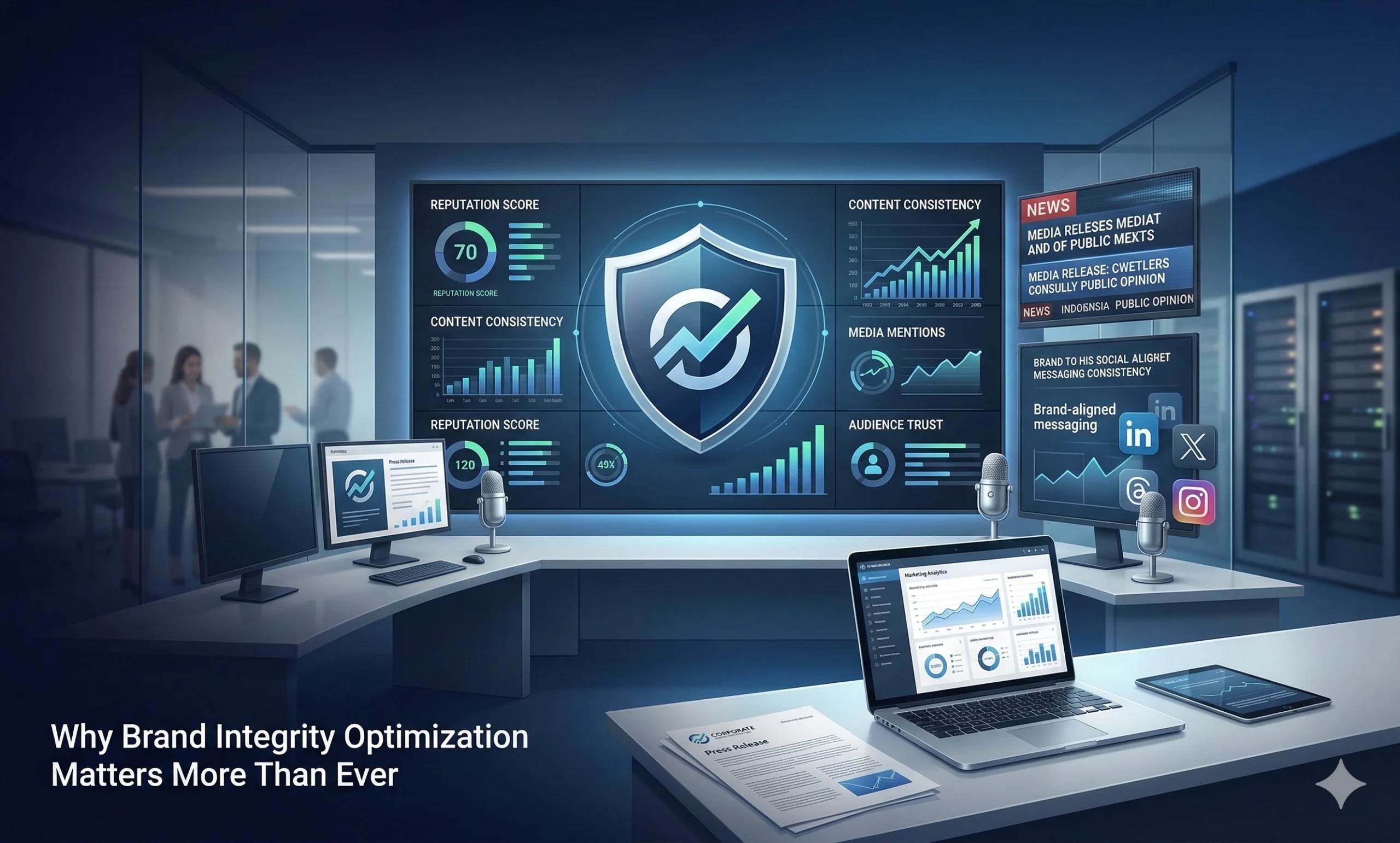
Why Brand Integrity Optimization Matters More Than Ever

Brand integrity optimization is more than image; it’s about aligning actions, values, and trust to create a brand that people believe in.
Trust breaks quietly. One slip, one promise left hanging and what took years to build starts to shake. In a world where every move is watched, integrity isn’t decoration. It’s the glue that keeps a brand from falling apart.
Brand integrity optimization isn’t about shine or spin. It’s matching words with actions. Staying steady, even when it’s easier not to. Being the same brand in private as in public. Because people don’t just buy things anymore they buy what they believe in.
Picture it like a mirror. Every ad, every post, every choice reflects what’s real underneath. When that reflection lines up with reality, trust doesn’t need to be chased—it shows up on its own.
That’s where strength hides not in loud claims, but in quiet credibility that endures. In what follows, we’ll look closer at how ethics, honesty, and trust shape brands that last. Because integrity isn’t a stunt. It’s built slowly, one real act at a time.
What Brand Integrity Optimization Really Means

It never starts with slogans or sleek campaigns. It starts deeper inside the bones of a business. Brand integrity optimization isn’t about decorating the surface; it’s about strengthening what’s underneath. It’s the quiet work that makes everything else stand tall.
At its core, it’s the practice of aligning what a company believes, says, and does. When all three move in the same direction, something powerful happens trust takes root. And trust, once planted, grows into loyalty. That’s what keeps customers coming back even when choices are endless and attention is short.
More than Reputation
Reputation is what people see. Integrity is what they feel. The two might look similar, but they’re not the same. You can manage reputation with clever words, but integrity needs consistent action. It’s built slowly, through moments that often go unnoticed: fair pricing, honest communication, transparent decisions.
That’s why Media Anchored treats integrity as a living part of business not a marketing checkbox. The company understands how a brand behaves when no one’s watching says more than any billboard ever could.
The Foundation Beneath the Shine
Every brand wants to be admired. But admiration without trust fades fast. Optimization here means checking the foundation values, culture, leadership and making sure they align with what’s being promised. It’s about removing the cracks before adding another coat of paint.
Think of it like a bridge. Each promise, each product, each employee forms a part of its structure. If one side weakens, the whole thing tilts. That’s why the strongest brands don’t chase trends, they reinforce their core. They build slowly, intentionally, and with purpose.
A Constant Alignment
Brand integrity optimization isn’t a one-time task, it’s ongoing alignment. As markets shift and expectations evolve, integrity must adapt without losing shape. That means revisiting what you stand for and how it shows up in daily operations.
Maybe it’s a policy change that puts people before profit. Maybe it’s owning up to a mistake publicly. Or maybe it’s simply listening more than speaking. Whatever the form, the aim stays the same to make sure what’s said outside mirrors what’s done inside.
Why It Matters Now
People notice more than they admit. They scroll fast, but they sense what’s real. Most things fade in the noise, but truth has a way of making them stop.
A brand built on integrity doesn’t chase attention it earns it. It shows up the same way, every time. And in a world full of promises, that quiet honesty is what makes it stand out.
In the end, brand integrity optimization isn’t chasing flawlessness. It’s staying honest when things get tough. It’s that calm steadiness, the kind that doesn’t crack under pressure. When a brand reaches that point, everything it does carries weight. Every choice, every message, every moment starts to matter in a deeper way.
How Corporate Ethics Shape Reputation Management

It’s easy to talk about values. It’s harder to live by them when no one’s watching. Corporate ethics and reputation management begin exactly there in the quiet decisions that shape how a company behaves long before the headlines catch up.
Reputation isn’t built in boardrooms or ad campaigns. It’s built in moments how a brand treats its people, how it reacts under pressure, and how it owns its mistakes. The world doesn’t expect perfection anymore. It expects honesty. And in that honesty, integrity takes form.
Doing Right When It’s Hard
Doing the right thing always sounds easy. Until it isn’t. It takes longer. Costs more. Tests patience. But that’s the difference. The brands that still choose it, the hard right over the easy wrong—are the ones people remember.
When a company pays fair wages, sources responsibly, or admits when it falls short, it sends a message louder than any press release could. These moments, stacked together, define character. Over time, that character becomes a reputation. And reputation once earned does more for growth than any short-term tactic ever could.
This is where brand integrity optimization truly begins. It’s not just about shaping perception but aligning every layer of the organization with a moral compass that doesn’t bend with market trends.
Reputation as a Living Reflection
A reputation isn’t static. It breathes, changes and remembers. Every decision adds another brushstroke to the picture people hold of your brand.
And the truth is, people forgive mistakes faster than deception. When a brand speaks openly, apologizes clearly, and corrects quickly, audiences listen. They don’t expect flawlessness, they expect accountability. The more transparent the process, the stronger the trust that follows.
That’s why corporate ethics and reputation management must move together. One without the other collapses. Ethics guide behavior; reputation reflects it. When the two align, credibility grows not just in markets, but in hearts.
From Compliance to Culture
Many organizations treat ethics like checkboxes, policies to follow, codes to sign. But integrity doesn’t live in documents; it lives in daily choices. It lives in leaders who tell the truth even when it’s uncomfortable. It lives in employees who feel proud to stand behind their brand.
Companies that get this right don’t have to chase reputation—it finds them. Their consistency builds quiet confidence. Their openness builds loyalty. And that loyalty turns into advocacy, the most powerful form of marketing there is.
The Circle of Trust
When ethics drive action, and action sustains reputation, trust forms a loop that keeps strengthening itself. Every ethical choice deepens credibility. Every credible act reinforces integrity. And together, they create a brand strong enough to weather scrutiny, competition, and change.
Because in the end, managing reputation isn’t about avoiding bad press. It’s about earning good faith. And that happens only when a company chooses what’s right again and again, even when no one’s keeping score.
Why Authentic Brand Communication Drives Loyalty

People can tell when words are real. They can also tell when they’re not. That’s the quiet test every brand faces now how to sound true when everyone’s talking. Authentic brand communication isn’t a skill you learn in a marketing playbook. It’s a reflection of how you actually operate when no one’s prompting you to.
It starts small. The tone of an email. The way a brand responds to criticism. The honesty in an apology. Those details tell people everything they need to know. When the voice feels natural, people lean in. When it feels forced, they pull away. Simple as that.
From Selling to Simply Sharing
There was a time when communication meant convincing. More noise, more reach, more polish. But that version of marketing doesn’t hold up anymore. People want presence, not pressure. They want stories that sound lived, not rehearsed.
That’s where brand integrity optimization really shows up. When the inside matches the outside, when your story lines up with your actions, it changes how your words land. They stop sounding like sales talk and start feeling like conversation. And people believe in conversation.
Realness doesn’t try too hard. It lives in the small things: the worker who means it when they talk about their job, the founder who says, “we got it wrong,” the customer who shares a story because it hit home. Those quiet moments outlast any campaign.
Tone That Carries Weight
Tone is everything. Too formal, and you sound detached. Too polished, and you sound like everyone else. But when the tone feels grounded, steady, open, human it cuts through the noise.
Authentic brand communication is about that middle ground. It’s not about sounding perfect. It’s about sounding like yourself. When a brand says, “Here’s what happened, here’s how we’re fixing it,” it earns trust faster than any glossy announcement. That’s the kind of honesty people remember, and more importantly, respect.
Trust builds quietly, through repetition and care. It’s not something you declare it’s something you prove, one small truth at a time.
Honesty Over Perfection
Perfection feels distant. Honesty feels close. People no longer expect spotless, they expect sincere. When brands open up about how they work, what they’re learning, or where they’ve stumbled, it feels real. And real wins attention.
Saying, “We didn’t get it right this time, but we’re learning,” takes courage. But it also builds connection. That’s the heart of communication with integrity where openness becomes your strength, not your risk.
The Voice That Feels Human
Behind every product, there’s a person. Behind every message, a heartbeat. That’s what people want to hear. Not slogans, not script voices.
In the end, authentic brand communication is about showing up honestly. When your words match your actions, and your tone matches your truth, people stop listening as customers and start listening as humans. And that’s when belief begins.
Building a Trust-Based Brand Strategy That Lasts

Trust isn’t built in a day. It’s built in layers—small actions that line up with words, over time. That’s the heart of a trust-based brand strategy. It’s not about promises. It’s about proof. About showing up, again and again, until people stop doubting your intent.
Every brand makes claims. “We care.” “We deliver.” “We’re different.” The real question is—how often do those words hold up when tested? Because when things get messy, when pressure hits, that’s when trust shows its face. Or disappears.
From Words to Action
Trust starts where talk ends. It lives in service, in transparency, in how quickly a brand owns its mistakes. When a company admits an error before anyone calls it out, people take note. When it makes things right without excuses, they remember. That’s how trust compounds. Quietly, but powerfully.
This is where brand integrity optimization meets its most visible form. It’s not a campaign—it’s a pattern. A brand that does what it says doesn’t need to convince people it’s honest. Its consistency says it for them. And over time, consistency becomes character.
The Weight of Reliability
Reliability isn’t glamorous. It doesn’t trend. But it lasts. A trust-based brand strategy doesn’t chase attention—it earns respect. It doesn’t need to talk about credibility—it lives it.
Every interaction adds or subtracts from the trust balance. A helpful customer support call. A transparent update. A fair refund. These moments may feel small, but they build something bigger—dependability. And dependability, once noticed, becomes reputation.
Think of it as quiet branding. No slogans. No noise. Just a steady rhythm of doing what’s right. That’s the sound people remember.
The Role of Proof
Promises create curiosity. Proof creates belief. Belief becomes loyalty in its purest form. Proof is not complicated. It appears in testimonials that sound real rather than scripted, in products that deliver on their promise without shouting, and in leaders who speak plainly about what comes next and what still needs work. Proof turns marketing into meaning.
And meaning is what people invest in. They don’t just buy the thing; they buy the feeling that comes with trusting it. That’s why the best trust strategies are built from the inside out. Employees who believe in what they do naturally carry that belief outward. Customers feel it without being told.
Earning What Can’t Be Bought
Money can buy visibility, but not credibility. That has to be earned. Slowly. Through decisions that might never make headlines but make all the difference.
A trust-based brand doesn’t just react to crises; it prepares for them. It trains people to listen, not defend. It values truth over image. And that commitment becomes the invisible thread that ties everything together—products, people, purpose.
In the end, trust is the quietest brand asset you’ll ever build. You won’t always see it working, but you’ll know when it’s there. Because when trust is strong, words don’t have to sell. They just have to speak.
The Role of Digital Transparency in Modern Branding

There was a time when brands could keep things tucked away. What happened behind the curtain stayed there. Not anymore. Every click, every comment, every photo tells a story now—and people are paying attention.
Transparency isn’t a nice-to-have anymore. It’s the rule of the game. In a world built on visibility, the ones who win are those unafraid to be seen clearly. That’s the shift we’re living through. And it’s changing how trust is built, tested, and earned.
The Age of Open Windows
Everyone’s watching, but not in a cynical way. They just want to know what’s real. The gap between a promise and the truth can break a brand faster than ever. Yet honesty—raw, unpolished, sometimes uncomfortable—travels just as far.
That’s where things start to get interesting. Because being transparent doesn’t weaken you. It sharpens your edge. When people see the real work behind your words, something clicks. They stop doubting and start believing.
That’s what brand integrity optimization is really about. It’s not about perfection—it’s about alignment. About making sure what you say and what you do don’t live in two different worlds.
The Power of Showing the Process
Here’s the thing: trust doesn’t grow from glossy statements. It grows from proof. From moments that feel unplanned but real like showing how a decision was made, or admitting when something didn’t go right.
A brand that opens up its process says, “We’ve got nothing to hide.” And that simple act flips the whole dynamic. People stop searching for flaws and start seeing effort.
Even a quick look behind the scenes at a team solving a problem, a leader explaining a tough call can create that connection. It’s not PR. It’s humanity.
Accountability in Real Time
Mistakes happen. Always have, always will. What matters now is how fast you own them. The internet moves fast, and silence feels louder than any apology.
A brand that responds openly, admits missteps, and fixes things in the daylight gains something stronger than control—it gains credibility. Real accountability travels far.
It’s not about damage control. It’s about integrity control. And people can feel the difference immediately.
Living in the Light
Transparency isn’t just public messaging—it’s culture. It’s how teams talk to each other when no one’s watching. It’s how leaders explain why choices are made.
When truth sits at the core, digital spaces amplify it. When it doesn’t, the cracks show fast. That’s why smart brands build from the inside out. They don’t perform honesty—they practice it.
Because eventually, everything becomes visible. And when it does, the brands built on truth won’t need to hide. They’ll already be standing in the light.
How Leadership Shapes Internal Culture and Brand Trust

It always starts inside. Before a brand earns trust out there, it has to live it here—within walls, teams, and small everyday choices. Integrity isn’t built through marketing. It’s built through people who believe in what they’re part of.
A strong culture doesn’t appear by accident. It grows from leadership that sets the tone, not through slogans, but through example. The way a CEO handles pressure, the way managers speak to teams, the way feedback is received—those moments define what the brand truly stands for.
The Mirror Effect
A brand can’t project what it doesn’t practice. When there’s honesty inside, it shows. When there’s silence or fear, that shows too. People on the inside see the truth long before the outside world does. And eventually, the two always meet.
That’s why culture matters more than any campaign. You can’t have credibility outside if the foundation within is fractured. Leaders who live by clarity and empathy naturally build teams that reflect it. Their tone becomes the brand’s tone. Their choices, the brand’s story.
In many ways, this is where brand integrity optimization begins—not with the customer, but with the employee.
The Weight of Example
Titles don’t earn respect. Actions do. A leader who admits mistakes, gives credit, and listens creates an atmosphere where truth feels safe. That kind of leadership turns honesty into habit.
And when integrity becomes a habit, culture stops needing to be managed—it sustains itself. The message spreads quietly, but powerfully: this is a place where what we say, we mean.
Small things matter. The way meetings are held. The transparency of decisions. The way tough conversations are handled. They all tell a story about what kind of brand you’re building.
Culture as the Invisible Hand
Every team has its rhythm. Some work in silence, others in energy. But in both, culture acts like an invisible hand—guiding, shaping, correcting. It’s what keeps people grounded when pressure rises.
When a team feels safe to speak up, innovation follows. When honesty isn’t punished, loyalty grows. And when accountability is shared, leadership becomes collective, not top-down. That’s how reputation starts forming long before a press release ever goes out. Culture, at its best, is not enforced—it’s lived.
Integrity That Travels Outward
What starts inside doesn’t stay there. The honesty that begins in team meetings eventually shapes how a brand speaks to the world.
People can sense authenticity. They know when a company’s message is born from real belief, not from a boardroom memo. And that’s the power of an aligned culture—it travels. Leaders who build integrity internally give their brands something rare: a voice that doesn’t need to prove itself.
Because when truth is the default, trust becomes the outcome. And that’s what separates brands that last from those that just look good for a season. In the end, culture isn’t just part of the business—it is the business. Everything else grows from it.
Emerging Trends in Brand Integrity Optimization

The ground beneath brands is moving again. The way people see and trust them is changing faster than most can keep up. What used to be about advertising and image now leans on honesty and visible proof. The spotlight is no longer on who shouts the loudest—it’s on who stands firm when the noise fades.
The next wave of brand integrity optimization won’t come from clever slogans or polished campaigns. It’ll come from brands that live their message, even when no one’s watching.
Transparency Becomes the New Standard
There’s a quiet revolution happening—one built on openness. Future brands will be judged not by how good they sound, but by how much they show.
Every claim, every value, every promise will need evidence. Customers now ask for the receipts, not the reassurance. They want to know where materials come from, how workers are treated, and what a company stands for beyond profits.
Tech will help tell that story. Blockchain will verify authenticity. AI-driven audits will reveal impact. Digital tools will make sure truth travels faster than marketing ever did. Transparency won’t just be a virtue, it’ll be survival.
Data with a Human Face
Even as tech takes center stage, the human element will still anchor everything. Numbers can prove action, but they can’t carry meaning on their own.
People want brands that feel human. Ones that admit mistakes, take responsibility, and learn out loud. Integrity lives in those moments—in how a brand handles failure as much as success.
Behind every report or metric, there must be empathy. That’s what keeps transparency from turning cold. It’s what makes honesty feel real.
Trust Will Be Earned, Not Engineered
In the years ahead, trust won’t be built with big campaigns or celebrity faces. It’ll be earned through small, consistent acts that align with purpose.
When people see that a brand’s values stay steady through backlash, through crisis, through silence—they start to believe. That belief becomes loyalty, the kind no discount or ad can buy.
Brands that understand this will stop performing integrity and start practicing it. They’ll know that trust isn’t a headline, it’s a habit.
Integrity as the True Differentiator
As the market grows louder and more automated, integrity will be what cuts through. The companies that treat ethics as an ongoing discipline, not a one-time statement, will lead.
It’s already visible. Investors now weigh social responsibility alongside profit. Consumers reward authenticity over perfection. Employees choose meaning over perks. The strongest brands of tomorrow won’t just sell, they’ll stand for something. Their stories will be lived, not scripted. Their reputations, earned, not engineered.
And when that shift becomes complete, brand integrity won’t just define success. It’ll define identity. Because in a world that sees everything, the only thing that lasts is being exactly who you claim to be every single day
Conclusion
At its core, brand integrity optimization isn’t about image—it’s about intent. It’s what happens when a company means what it says and shows it, quietly, over time.
Trust often begins with small signals: the choices people overlook, the way others are treated, and what a brand stands for when there is no spotlight.
The future will belong to those who don’t chase approval but earn belief. You’ll see it in how they admit mistakes, stay steady in noise, and let truth do the talking.
Integrity doesn’t need to shout. It endures. It turns loyalty into something deeper: a shared conviction. And while everything around may shift, a brand built on trust doesn’t waver. It simply keeps showing up, proving that honesty still works.